

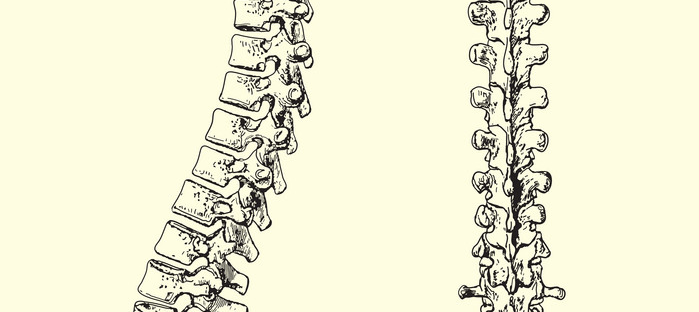
The human spine is a marvel of nature. It allows us to walk, and run, upright; houses our precious nerves; and, acts as an anchoring point for the entirety of our bodies. The spine does its job, and does it well, due simply to research and development spanning hundreds of millions of years.
The origin of the spine…
To appreciate the spine for what it truly is we must realize its uniqueness in the natural world. To start, there are five kingdoms of life: Animals, Plants, Fungi, Protists, and Monera. Backbones and/or spinal cords are found in less than ten percent of species in the animal kingdom alone! More specifically in just one of the thirty five animal phyla, chordata. The Phylum Chordata (“with a cord”) includes animals such as fish, amphibians, reptiles, birds, and mammals.
Chordates, as they’re called, possess a long tube of nerve fiber running along the dorsal (back) edge of the organism. This not only provides structural stability but improves the integrity of nerve fibers throughout the body.

Early chordates of the Cambrian period used this cartilaginous cord as an attachment for muscles, aiding them in propulsion through water. These first backbone prototypes likely looked something like the modern day “lancelet” (pictured above). A translucent fish like organism, this animal possess a “notochord”, the predecessor to the modern spine. A true living fossil, this animal likely has not changed for over 400 million years!
As evolution took its course, the requirements for this notochord changed. Moving slowly from water, to land, placed additional stress on early spinal cords. Not only did the notochord now need to support the movement of muscles against liquid water, but needed to defy the constant force of gravity. This is where that we begin to see bones in the fossil record.
Although first found in fish, bones spurred the evolution of animals that were able to live on land permanently. Known as tetrapods (“four feet”) these animals make up the amphibians, reptiles, birds, and mammals we are familiar with.
Comprised mostly of inorganic Calcium, Potassium, and Carbonate, bones offered a viable means by which an organism could support itself under gravity. Due to all tetrapods sharing a common ancestor, the skeletal blueprint has not changed greatly over the course of the last half billion years.

The sketch above depicts what it describes as a “generic tetrapod”. The large majority of modern day tetrapod skeletons, including our own, follow this basic design. What this tells us is that the skeletal structure can support an immense number of abilities and functions. From the gecko, to the giraffe, this blueprint has shown its viability for survival across countless niches and environments.

Humans drastically altered this design by standing on two legs instead of four. Moving with just two limbs classifies humans as bipeds (two feet), a rather uncommon occurrence in nature. Although uncommon, various species of bird, lizard, and ape fit this same criteria. Humans differ from these other bipeds, saving apes, in the lack of a tail. The tail acting as a counter balance for the torso and abdomen; the center of gravity is shifted towards the mid-line of the body increasing stability of the whole machine. With no tail, the human body and brain must work harder to maintain balance.
Upright posture is a precarious one to say the least. Our postural muscles, which are not readily under our conscious control, are continually adjusting along our spine in order to maintain upright position. This occurs all while the phasic muscles, the ones we can control, propel the body through space. This system does not leave much room for error in comparison to the more stable, more tested, four legged structure. Despite being difficult to maintain, bipedalism does come with its advantages.
Standing upright frees the front two limbs from movement. Unnecessary for propulsion, they are able to adapt for whatever the environment permits. In theropods (think velociraptor, T. rex, etc.), the “raptors” eventually turned their arms into the wings of birds.
For man’s predecessors, the use of tools grew exponentially as their front limbs turned to dexterous hands. Tool use contributed to the increase in food availability and therefore the energy to the body and brain. Spanning millions of years this feedback mechanism allowed for humans to succeed in almost any environment the planet had to offer. Our large brains and adept hands gave us the ability to hunt, fend off predators, and create shelter. Over millennia we made our way up the food chain to where we are now.
What does this mean for people today?
 For many, life in the current world is a life spent in a seated position, the weight of the body being supported against gravity at the hips. We live a life of relative luxury when compared to our ancestors; yet, this does not translate to a fully functioning body and mind. The sedentary behavior we exhibit today has been long been absent from our genetic lineage. Not adapted for immobility, the body of the modern human is one slowly withering into dust.
Again, the body can only respond when prompted to by the environment. If the life one lives does not require a great deal of physical effort, physiology will be altered to better fit this lifestyle. In an attempt to allocate resources more efficiently, the body places functions associated with upright posture and movement lower on the list of priorities. Over time this leads to individuals moving in ways that are not in harmony with the design of body. Improper movement patterns not only compromise the integrity of the nervous system but hinder the body’s own healing mechanisms.
Known as invivition, the tissues and cells inside our bodies receive nutrients with the help of physical movement. The movement being a means by which cell membranes are exposed to a greater area of material for nutrient exchange. If the range of motion at a joint, especially the spine, is restricted so does the total supply of nutrients to said joint. A starving joint is not one that will be able to heal itself from environmental stress.
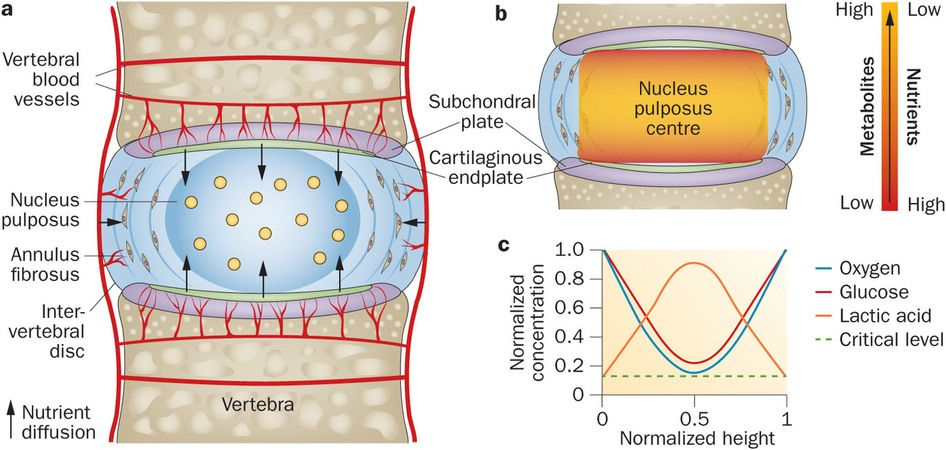
This entire process feeds itself; in an ideal world increased movement allows for quicker and more total repair of tissue. Unfortunately, this also means restricted movement leads to a decrease in function, which means further restricted movement. If left unaddressed this loop can repeat unto death. So, improper use of the spine limits the ability to move and therefore maintain our bodies.
As stated before, our bipedal posture does not provide a solid foundation against normal gravitational vectors. Two legged movements are inherently unstable due to the uneven distribution of weight in comparison to a four legged structure. Because of this, the human spine has evolved to act as a shock absorbing spring; able to transfer great amounts of force in order to induce movement yet still provide stability. Shaped similar to the elegant sine wave, the human spine curves back and forth as it travels up the body. Starting with the lordotic curve of the lumbar spine (lower), to the kyphotic curve of the thoracic (rib cage), back to lordotic curve of the cervical (neck). These curves act to give the spine freedom of movement in all dimensional planes, while still protecting the spinal cord, and supporting muscular attachments.

If this delicate curve is disrupted, so shall all the functions dependent on the spine. Without proper position, the nerves that exit the spinal cord through the spine can become slightly pinched or disturbed. If this occurs then neurological function can be influenced at a systemic level. According to Gray’s Anatomy the nervous system,
“… is the mechanism concerned with the correlation and integration of various bodily processes and the reactions and adjustments of the organism to its environment.”
Without a properly functioning nervous system the body will not be able to maintain homeostasis systemically and/or locally. Failure to adapt to the ever changing environment will result in disease or death at some point.
Even slight misalignment along the spine can lead to enormous issues if not corrected. Known as subluxation, a joint can become partially dislocated from its position, causing the joint capsule to be stretched from its proper state. While this sounds painful, the majority of nerves around the vertebral outlets do not possess many pain receptors, meaning that local pain may not be present. However, the nerves, and blood supply, that originate near the joint often become compromised. Additionally, these slight alterations can result in disruption to the flow of cerbrospinal fluid across the spine. Because of the nature of nervous tissue and vasculature, an impingement upstream will often manifest as downstream issues. This means that issues further down the limbs are often a result of dysfunction near the spine.
The phenomenon responsible for the “cracking” heard after joint manipulation is also related to nerve impingement. When physically pulled from its anatomical resting state, the vacuum inside the synovial capsule (the lubricating, nutrient rich sack) of the joint creates a pocket of gas to deal with the change in volume. The characteristic sound is heard when the bubble of gas is dissolved back into the synovial fluid of the joint. While the presence of a crack does not guarantee severe nerve impingement, it certainly is a clue.
Chiropractors make their living off these very pops and the changes they induce. While indeed beneficial for the needs of the spine, the art of chiropractoric medicine is delicate and precise. Unfortunately, the physical manipulation of another individuals spine is incredibly difficult and is subject to injury. Sharp adjustments to a spine that has been fixed into a position for some time may result in sudden changes to local blood pressure, spurring a condition such as a stroke.
The Electric Symphony
Nerves act as a highway by which the body coordinates each and every one of its functions. If this highway is damaged and cannot be traveled upon, the body is unable to communicate with itself. As with any complex machine, failure to synchronize the billions of processes occurring at any given time results in chaos and dysfunction.
To better understand this concept it is important to remember that we exist in an electromagnetic universe. This means that despite our fixation on the physical, mass is but energy existing in a different vibrational state. The nervous system, though made from physical materials is based upon the interactions of electrons at the atomic level. Through the flow of energy we are able to perceive our surroundings and make conscious decisions within our mind. The harmonization of these countless electrical impulses is akin to a symphony. When we are in a state of good health, the flow of energy is seemless and is akin to good music. In disease, some parts of the human orchestra are out of tune, manifesting as physical symptoms. It takes but one dysfunctional section to throw the entire human being off key. The severity of this dysfunction will vary, and when subtle, may go on a lifetime without recognition.
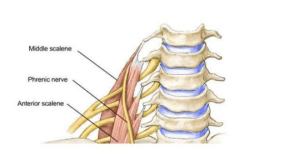
As an example, the phrenic nerve is responsible for the function of the diaphragm, the primary muscle involved with breathing. The nerve exits the spinal cord via the cervical plexus, a bundle of nerves in the neck. If the skeletal structure of the neck is placed in a position that physically disrupts the phrenic nerve, breathing –the most important function of the human body– is disrupted.
Paralysis of the diaphragm stimulates the use of so called secondary respiratory muscles in order to keep you alive. These secondary muscles generally work along with the diaphragm but when that is not possible chest breathing becomes the only means by which gas exchange can occur. The top third of the lungs, aerated by these secondary respiratory muscles, contain the least amount of surface area for gas exchange. If one breathes exclusively with these neck and chest muscles then one is certainly not allowing for optimal gas exchange.
When the body cannot exchange oxygen and carbon dioxide, metabolic acidosis ensues. The more acidic the solution of the body becomes, the less nutrients in the form of electrons can be transferred from cell to cell. Over time this leads to apoptosis (cell death) and potentially your death. This condition stimulates the body’s stress response further (as more oxygen is needed) which then leads to more chest breathing if the diaphragms remains dysfunctional; a vicious feedback mechanism designed to keep you alive for the near future, not meant for a lifetime.
This is but one isolated facet of nerve dysfunction. The truth is that a situation similar to this can occur from any nerve throughout the spine. Granted they may not be as dire as breathing, but other bodily systems are still reliant on proper nervous system function.
Cerebrospinal Fluid
Encasing the brain and spine is a vascular system that contains what is known as cerebrospinal fluid (CSF). This substance acts a medium for nutrient exchange and waste removal from nerve tissue. Functioning similarly to blood vessels and lymph, the canals within the spine must have optimal flow for constant nutrient exchange too occur. Subluxation of a vertebra significantly influences the integrity of this flow of CSF and can lead to reduced uptake of nutrients and removal of waste products. The result is a spine, and subsequent nerves, with reduced physical integrity.
The Autonomic Nervous System & The Unconscious Mind
The nervous system can be broken down into two functioning parts; one we are conscious enough to control and one that operates at a subconscious level. The conscious aspect, the somatic nervous system, is responsible for all the voluntary actions of the body and mind. The subconscious is known as the autonomic nervous system; which, adjusts to the environment without “your” knowledge.
This autonomic nervous system has two (technically three if you count the enteric nervous system) divisions within itself, the sympathetic (fight or flight) and parasympathetic (rest and digest). Both of these must be balanced in order to maintain a healthy organism, as too much emphasis on one end will lead to disorder of the whole. The role of the parasympathetic is simply to build and repair tissue in the body, thus the name “rest and digest”. The sympathetic acts to keep an organism alive when stress is encountered. Typically this would mean either engaging in a physical fight or fleeing danger altogether. In theory, a healthy organism will have enough stress to keep the body adjusted to the environment, but enough rest to heal and become stronger.
For many, running or hiding from potential predators is not a frequent occurrence in life. However, the response to stress is based on the brain’s perception of whatever the body is able to tell it. Your body will react to the three types of environmental stress — physical, emotional, chemical — all in the same manner. If there is improper arrangement of the spine so that parasympathetic nerves are impinged, both the body and mind will perceive as if they are being physically threatened. Forward head carriage (pictured below) occurs when attempting to appear smaller in the face of danger — picture a dog, or child, who has just been scolded and knows he or she is in the wrong, drooping their head forward and down in shame. It is no surprise that if a lifestyle places the head in this position for long periods of time, the body will follow and adapt to what it’s being told by its own nervous system– as it has no other choice.
 As you read this, be aware of your head in relation to the rest of your body. If your head is propped out far in front of your spine then your neck is currently straining to keep your skull from rolling off your body, and onto the ground.
Stress is then both a result of one’s perception of the environment, along with one’s physical position in space. Unbeknownst to many people, living life with this constant stress is deadly. The biochemical response to stress has been shaped over millions of years to preserve survival for the short term, not the long term. The mechanism places your body in a state of breakdown; and, if this occurs for too long, your body will be susceptible to disease and/or death.
How does stress actually affect our health?
Your body reacts to stress by releasing compounds that act as signalers for certain cells to perform certain functions. Known as (stress) hormones, prolonged use contributes to the metabolic and immune system dysfunctions associated with deadly diseases. When danger presents itself to the brain and body, cortisol, produced by the adrenal glands (on top of the kidneys), help to elevate glucose in the blood in order to supply cells with ready energy. Increased glucose in the blood over time can lead to the metabolic condition we know as diabetes.
All the while, cortisol suppresses the immune system’s ability to inflame, and therefore repair, damaged tissue. In fact, cortisol is the best anti-inflammatory known to mankind. Though this might seem counterproductive, this is the conservation of energy and resources. Your body and brain are intelligent enough to recognize the priority in the environment and almost instantaneously adapt. When being presented with a threat, immune and digestive functions take a back seat. Digesting your last meal and fighting off a cold can afford to wait when pursued by a pack of wolves. Prolonged periods of time spent in this state is where problems arise. Tissue that is not able to heal itself will be subject to disease or dysfunction.
 Living in a constant state of fear is typical of an organism not long for this planet. The amounts of stress an organism experiences depends on said organism’s position in the food web/environment. The lifespan of many animals is indicative of stress experienced over time. A mouse, which lives a life of constant fear and danger, likely has elevated stress hormones over its lifetime. Unsurprisingly, mice live but just a few years. Compare the mouse to say, a blue whale —which faces few natural stressors— that can live upwards of 110 years!
Fatigue of the stress response…
When in perceived danger the mind must be firing on all cylinders in order to achieve maximum awareness of the environment. So, to increase communication within the nervous system, the body floods itself with neurotransmitters. Dopamine, Epinephrine (adrenaline), and Norepinephrine act to improve the nervous system input/output, and increase the chance of survival. Overuse of these hormones, along with cortisol, will exhaust the nervous system. A chronically taxed nervous system is indicative of a wide array of mental illnesses. Known as adrenal fatigue, this condition is associated with depression, anxiety, schizophrenia, Alzheimer’s, and dementia.
Although not the sole and undeniable cause of these mental pathologies, chronic stress manifests itself as these issues. After all, symptoms are not disease, symptoms are signs the body is not functioning properly and must be corrected in some way. Treating the symptoms alone is a stop gap solution that masks the issue, only to come back with greater force later. If this stems from mere spinal misalignment, additional stressors from the environment will only worsen the issue.
Given this, the first step towards providing yourself the best chance to avoid these conditions is to treat your spine with the respect and care it so deserves.
How can I care for my spine?
Practicing good posture is the start. What does this mean? Ingrained into your nervous system exists neuronal connections that have long since fired. You know how to walk with an elegant, efficient gait that works with the design of the spine. The metaphorical dust must be brushed off those nervous pathways; you must begin to move.
There is no secret. Repetition and consistency is the key to this physical awakening. It will be difficult to reverse all of the bad habits accumulated in your nervous system over the years. This is the reality you must face. Though there is no doubt it will be difficult, it will be worth your while. Remember, you must first give, in order to receive, in this life.
How will I know if I am moving correctly?
The spine is, in itself, an engine designed for energy efficient movement. You theoretically do not need your arms and legs to produce movement as all motion originates at the spine. In fact, our spine works similarly to a fish or lizard, our vertebrate forefathers. Limbs exist solely to provide mechanical advantage against gravity but do not induce motion. Instead motion is initiated by the lateral flexion (side bending) of the spine. This therein creates an axial torque (rotation) then sagittal flexion/extension that radiates through to the limbs.

While the walk of a reptilian such as the lizard above is exaggerated when compared to humans, the spines of each function rather similarly. As bipedal beings, humans must rely on more rotation than lateral flexion as opposed to our quadrupedal relatives.

In order to achieve adequate rotation the human body relies on groups of muscles that coordinate movement spanning multiple joints. The primary muscles in question are attached to the thoracolumbar fascia, the gluteus and latissiumus dorsi, among the largest and strongest muscles in the body. These muscles act together similar to a sling, contracting in unison with help of the elastic fascia –the white connective tissue– that passes over the Sacro-Illiac joint. Upon contraction, the shoulders and hips rotate opposite of each other creating contrasting forces of axial torque. This feature allows for efficient transfer of energy through the limbs and to a point of contact with the ground.


Thinking about the movement too much is not the solution. Being is the solution; proper movement can only be attained through a certain state of existence. We spend to much time inhabiting our minds that we forget how to be our bodies. The good news is that you know how to move in this fashion, you just have to tap into it. As ambiguous as this sounds, it is the truth.
The body rewards beneficial movement through feelings of pleasure and happiness. Why do you think you truly feel alive after engaging in vigorous physical activity? Yet, sitting all day just seems to make you more tired and irritable. Every cell in your body needs you to move so it can maintain itself.
It makes sense that the brain, in order to encourage healthy habits, creates this pleasant feeling to encourage you to do it again. Chances are, if a movement feels natural and fluid, it is; if a movement causes pain and feels awkward it should be rightfully avoided.
Why else would pain even exist? Pain is the body telling you that something is wrong and changes are necessary. Even if you choose to ignore these signs the body will only continue to send them. If you then develop a greater tolerance to the pain you are simply choosing to ignore the signs your body is desperately trying to give you.
Although it may seem too simple to be true it isn’t. Simple low intensity exercise like walking is enough to prevent the likes of cancer, heart disease, metabolic disease, and debilitating mental illness. There will never be a pill or quick fix that can do all of this. You need to want the gift of vitality. This will not come from me telling you, it must come from within your own being. Whatever your motivation may be, you have to take the leap.
Failure to bring to fruition the potential beauty of your body is one of the greatest travesties you can commit. This outer beauty is just a physical manifestation of seamless function of the masterpiece that is you. Your spine is where it all begins.
Your greatest asset in this life is a healthy, functioning spine.
References:
Cephalochordates. (n.d.). Retrieved from https://eol.org/pages/1585
Nielloud, F., & Marti-Mestres, G. (2010). Pharmaceutical emulsions and suspensions. New York: Informa Healthcare.
Gray, H., Gray, H., & Spitzka, E. A. (1913). Anatomy, descriptive and applied, by Henry Gray. doi:10.5962/bhl.title.44407
Catecholamine. (n.d.). Retrieved from https://www.sciencedirect.com/topics/agricultural-and-biological-sciences/catecholamine
The Phrenic Nerve. (2018, June 26). Retrieved from https://teachmeanatomy.info/neck/nerves/phrenic/
Booth, F. W., Roberts, C. K., & Laye, M. J. (2012). Lack of exercise is a major cause of chronic diseases. Comprehensive Physiology, 2(2), 1143-211.
Gracovetsky, Serge. (1997). Linking the spinal engine with the legs: a theory of human gait. Movement, Stability and Low Back Pain – The Essential Role of the Pelvis.
Picture Credits:
https://www.vectorstock.com/royalty-free-vector/human-spine-vector-1337710
https://www.carlsonstockart.com/photo/cephalochordate-lancelet-amphioxus-chordata-illustration/
https://www.artstation.com/artwork/6eQGN
https://orthoinfo.aaos.org/link/0b4bb981a477402a9e4cfc16f5ff8bb9.aspx


 Health For Life