


Across countless cultures — applying to both sexes — lies an innate infatuation with the rear ends of other individuals, as well as our own. Whether it be on a female, or male, people are drawn to developed hindquarters. No where else is this more evident than within the bowels of modern social image sharing platforms. The mention conjures up images of women, and some men, advertising products that will help one achieve a larger and more aesthetically pleasing butt.
Why this is the case revolves around the function and purpose of one’s backside. Perhaps due to the Puritan influence on early Anglo-American culture, this region of the human body has been ostracized by our society for the past few hundred years. Only recently have we begun to rediscover the wonder and importance of such areas of our anatomy.
Anatomy
What we consider the butt is actually a group of three muscles known as “Glutes”. More specifically the gluteus maximus (“largest glute”), gluteus medius (“middlemost glute”), and gluteus minimus (“smallest glute”). These three muscles are arguably some of the most important in the human body in regards to movement, power, and strength.
Gluteus Minimus

The smallest of the three glute muscles, the gluteus minimus lies beneath the other two; attaching to the the ilium (hip) and inserting onto the greater trochanter (femur). Though small, the muscle performs a variety of functions depending on the position of the leg and hip. Primarily an abductor when the hip is extended (upright position) the glute minimus also performs internal rotation (when the hip is flexed) along with flexion itself. As one can see, though the smallest of the glutes, the minimus is still an important player in a variety of movements occurring at the hip.

Gluteus Medius

The next largest muscle in the glute family is the gluteus medius. Located atop the minimus, and sharing similar origin and insertion points, the medius is responsible for a similar array of functions. Important for stabilization of the hip during a single leg stance, the medium glute plays a role in hip abduction (during hip extension) as well as internal rotation.
For us humans, stabilization in a single leg stance is essential to ensure a powerful and supple gait. A healthy glute medius will translate to better balance and an increase in movement efficiency in regards to walking ,running, and/or any other unilateral lower body movement.
Gluteus Maximus

The grandest of the gluteus muscles, the glute maximus, is by no accident the largest muscle in the human body. The muscle essentially connects the upper body, torso, hips, and legs through a number of different origins and insertions. More specifically the pelvis, sacrum, coccyx, along with the lumbar, thoracolumbar, and gluteus medius fasciae.
The primary job of the largest glute muscle is the action of hip extension. This means propelling the body forward through the driving of the leg/hip backwards. This is why the gluteus maxmius in our closest genetic relatives (great apes) are relatively small when compared to humans. Humans practice upright posture and walk on two legs more frequently than any other. Though not necessarily a postural muscle, the gluteus maximus is most active (and strongest) within the end range of hip extension– the position assumed during the drive phase of an upright gait. Apes who live more on four limbs have more developed legs and upper extremities to allow for a four legged position.
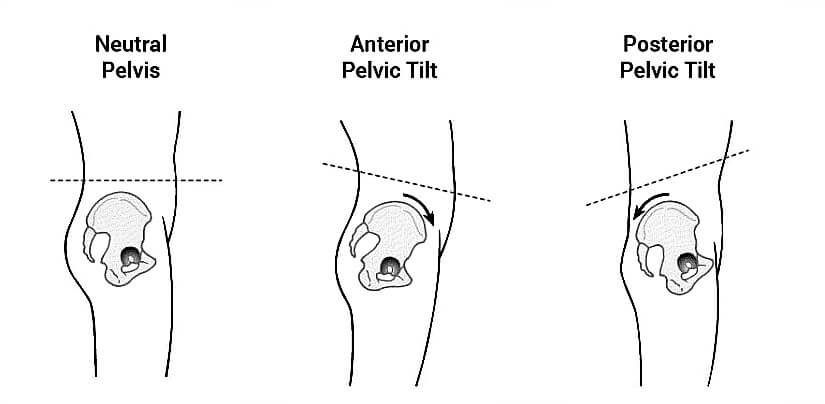
Though certainly the largest and most important hip extensor, the gluteus maximus also performs the following actions: trunk extension, posterior pelvic tilt, hip external rotation, hip abduction (upper fibers), force closure of sacroiliac joint, force transfer through the Ilio-Tibial Band (ITB), as well force transfer through the tensor fascia latae (TFL). Again, just like the other glute muscles, the maximus is active during nearly every phase of movement,.

The most notable secondary action of the gluteus maximus is hip abduction while the hip is in a flexed position. This is due to the architecture of the muscle itself; the oblique angle of the muscle fibers allows for varying angle of force output across a number of positions.
Posterior Oblique Sling

It should be noted that despite the size and diversity of the glute it does not — and cannot — work alone. Specifically, the gluteus maximus is part of a movement system known as the “Posterior Oblique Sling”. The name simply means a sling of muscle on the back situated at an oblique angle. This system is designed to allow for efficient, yet powerful movement. If one glances above one will see that the direction of the muscle fibers of the gluteus maximus corresponds to Latissimus dorsi — the large shoulder extensor muslce on the back — on the opposite side. These two muscles — along with the elastic, energy saving, connective tissue (Thoracolumbar fascia) — work in harmony to generate a forward gait.

Conclusion
The glutes are movers in all three planes of our three dimensional world. They help with fine motor control, stabilization, and force generation (movement). The three dimensional, almost spherical, shape of the muscle(s) corresponds to muscle tissue architecture spanning three directions Your glutes are working — ideally –anytime you are alive.
Real Life Implications
Ok, so what does this mean for your average person? What are the relevant implications towards you living your life?
Quite simply, your glutes are essential if you wish to both move and reproduce. If your ancestors could not perform these two actions, you would not be here. For those of us who plan on doing any combination of such things in our own lives, the glutes are a good place to start.
When a person has strong, healthy, functioning glutes they are able to propel themselves effectively through life. Just take a glance at any combination of professional athletes and developed glutes are a given. All of us are athletes in the game of life, and if you wish to win that game (whatever that means to you) glutes are critical. Though indeed essential for movement and balance the sacred act of procreation cannot occur without proper glute activation as well.
More specifically, in order for a male to deposit his genetic material well within a female, the gluteus maxmius must perform both hip extension and induce a posterior pelvic tilt. If both partners ellicit this same movement, the chances of procreation are dramatically increased. In short, the glutes of both sexes help to give sperm the shortest distance to the egg. If this is the case, it makes sense as to why both females and males size up the rear ends of a potential mates, whether they are aware of it or not. We all want to give ourselves the best shot at continuing on the gift of life and the rear end is a signaler of such an ability.
Dysfunction
If one’s glutes are either weak or just not being utilized to their potential, he or she can expect a number of different issues. Low back pain, knee pain, foot pain, shoulder pain, neck pain, and even arm pain can all be the work of weak gluteals. If one lives in constant pain, these symptoms can carry over and interfere with your mental, and emotional well being, eventually manifesting as stress. Combine these issues and their potential consequences and it should be apparent that your butt needs to be cared for. That said, how do you do just that?
How to Train the Glutes
There exist many methods to stimulate the growth and/or strength of one’s gluteal muscles. For the sake of sanity it should be realized that many of these are redundant and an inefficient use of one’s time. One could perform a dozen of movements that isolate the glutes while getting very little in return– in regards to time spent exercising. Truthfully, one should train the glutes by doing what they are meant for: movement and balance.

This means that simple activities such as walking, running, sprinting, jumping, and even yogic practices are time effective methods of growing your glutes. People confuse muscle growth strictly being associated with resistance training. Though resistance training can induce muscular growth it is not exclusive to the phenomenon. Even participating in sex, within the confines a healthy relationship of course, is a phenomenal workout for one’s butt.
Your butt says a lot about you. Whether you can generate large amounts of force, balance, or procreate is all spelled out on your backside. If you wish to further focus on developing your glutes — or any other part of your body for that matter — please contact me in regards to a custom built exercise plan backed by the latest in strength and conditioning science.

If you can visualize it, you can build it.
References
Jeong, U. C., Sim, J. H., Kim, C. Y., Hwang-Bo, G., & Nam, C. W. (2015). The effects of gluteus muscle strengthening exercise and lumbar stabilization exercise on lumbar muscle strength and balance in chronic low back pain patients. Journal of physical therapy science, 27(12), 3813–3816. doi:10.1589/jpts.27.3813
Gluteus maximus. (2018, June 17). Retrieved from https://www.strengthandconditioningresearch.com/muscles/gluteus-maximus/
Gluteus Medius. (n.d.). Retrieved from https://www.physio-pedia.com/Gluteus_Medius
Boren, K., Conrey, C., Le Coguic, J., Paprocki, L., Voight, M., & Robinson, T. K. (2011). Electromyographic analysis of gluteus medius and gluteus maximus during rehabilitation exercises. International journal of sports physical therapy, 6(3), 206–223.
Gluteus Minimus. (n.d.). Retrieved from https://www.physio-pedia.com/Gluteus_Minimus
Picture Credits


 Health For Life
