


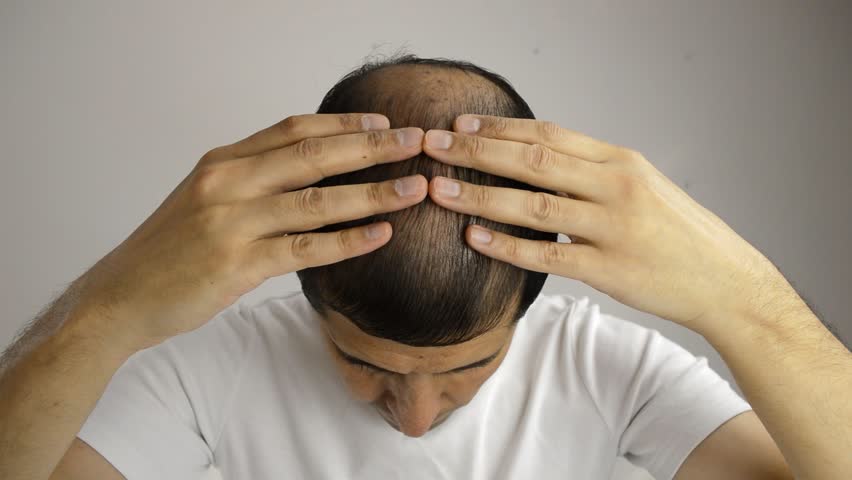
Hair loss is a condition that plagues men and women alike, a phenomena that spurs worry, and anxiety upon those who are afflicted by it. Countless individuals are in the process of losing their hair and are told there is nothing they can do. Worse yet, others believe the occurrence is the fault of his or her own genetics.
For many, hiding behind the excuse of genetics is a popular tactic for coping with such a situation. It is quite easy to excuse yourself and blame factors that you cannot control. Unfortunately, this cognitive strategy is one of despair, defeat, and hopelessness; and, as in nature, predators exist to prey upon these weakened individuals. These modern day predators come in the form of hyper-affluent and dangerously influential drug companies. These very companies live off the fear and misinformation that currently exist around the topic. As an example, people are prescribed drugs that can cause both heart failure and sexual dysfunction (1,2), all for a marginal increase in head hair. Needless to say, a different approach to the problem of hair loss is necessary at this point in time.
The Issue
Although the loss of one’s hair may seem trivial to others, for many individuals it is akin to a death sentence. In today’s materialized, ego-centric world, appearance is (seemingly) everything. For nearly all mammals, humans included, healthy hair is a reflection of a healthy being, essentially an advertisement of virility and reproductive capability.
See the majestic mane of a male lion. A male who leads a pride of females has a dark, thick mane; meanwhile, rogue males sport thinner, patchier, lighter manes. Though humans are certainly not big cats, we share a tremendous amount of genetic material and similar social behavior. In a metaphorical sense, we all want to be the lion at the head of the pride. We want what is best for ourselves and healthy hair comes with the territory. If we do not have said hair being at the top will be harder than if we did. This is not saying that without hair one cannot succeed in life, but if given the choice nearly any individual will pick having hair versus not. The reality of this may be hard to swallow but does not make it any less true.
Why Am I Losing My Hair?
If you are losing hair (on your head), it is because the scalp upon which your hair grows does not have proper nutrient supply to support the growth and health of hair follicles.
Although the concept is easy to understand the application of this idea will require you to change habits you’ve acquired over your life. Perhaps dietary, muscular, or even neurological, the factors of hair loss are many, but indeed reversible. Before we dive any further we must understand the function of hair and why it so prized by each and every one of us.
In mammals, hair functions to regulate temperature, act as protection, and serve as sensory organs. Specifically, humans have evolved with the majority of their hair residing on top of the head. This is related to the relative size and importance of our brains. If the brain is very dear to us it would of utmost priority for us to protect and support it. So, the hair on our head helps serve as an extra line of defense as well as aiding in temperature regulation of the brain. That said, hair is not absolutely necessary for survival, as anyone can live hair free– but not without a cost. The cost being a brain that must spend more energy regulating temperature to ensure proper function, along with theoretically being more at risk for injury.
The Hair Follicle
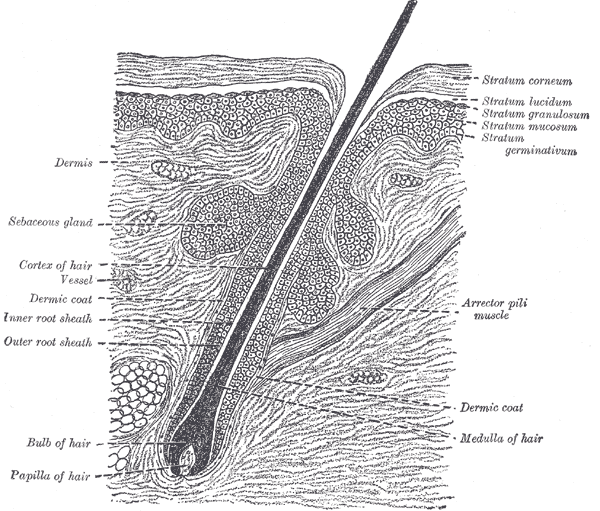
The most basic unit of hair, the follicle resides just beneath the skin and is supplied with nutrients to the root via blood vessels within the dermis.
Each hair follicle is subject to three stages of being: anagen (growth), catagen (tranistion), and telogen (rest). These states are dependent on the given blood/nutrient supply to each follicle. A follicle with a healthy support system will remain in the anagen phase until that support system is compromised in some way (3).

As I mentioned above, the only reason someone would lose hair is if the body did not possess the physical means of supporting said hair. What this means is that for some given reason thousands of hair follicles return to a “dormant” state of being. If the body cannot afford to produce and maintain such hair, it places it on pause. So, you are not losing hair for good, the hair is essentially hibernating.
Scalp Dysfunction

Why are there so little nutrients going towards the hair that hair growth cannot be sustained? The answer lies in the anatomy of the scalp itself. Known as the galea aponeurotica the scalp is a sheet of connective tissue with muscular attachments on each side. Controlled by the opposing frontalis and occipitalis (technically both known as the epicranius muscle) the galea aponeurotica allows for the transfer of force across the top of the head. For humans this is important for the maitainence of upright posture, specifically of the skull ().

Although important for posture, the galea aponeurotica and its surrounding muscles play a role in the flow of blood to the scalp. Just as other skeletal muscles aid the heart in mobilizing bodily fluids so do the muscles atop the head. It is when there is dysfunction in these muscles that hair loss begins to manifest.
If one were to glance at the image below one can see that the blood supply to the top of the head comes from branches off of the internal carotid, and external carotid arteries. These arteries travels up the front and side of the skull respectively. Notice too how as the arteries move upward they become smaller and more dispersed. The smaller an artery or vein, the more reliant it is on the contractions of muscle to continue the flow of blood and thereby nutrients to various tissues.

If an individual possesses a set of scalp muscles that have reduced mobility or are in any other way dysfunctional, the blood supply to the rest of the scalp would be impaired. Constant tension applied to the scalp will bring blood supply to a grinding halt; given enough time this will mean the hair follicles that reside on top of the head would be starved of blood and therefore nutrition. This will result in said hair follicles returning to a dormant state because the body is unable to derive matter from nothing.

For further confirmation of this theory, look at the common patterns of hair loss in men. Hair is most often “lost” on the top of the head. The top of the head, in comparison to both the sides and rear, has less blood supply and is therefore more vulnerable to nutrient deprivation. Additionally, it is not uncommon for those afflicted by hair loss to experience tingling, sensitivity, and dandruff; all of which are clues to the body attempting to adapt to physiological circumstances. These circumstances being the impairment of both nerves and blood vessels on the top of the skull.

The mechanism behind this reduced blood flow is a result of mechanical tension applied to the scalp. Given the architecture of the skull the crown and temple regions of the skull experience more mechanical force than other regions (6). As a result, the tension makes blood flow, and nutrient exchange more difficult.

Other Potential Factors
Hair loss is certainly more prominent in males than in females, this is undisputed. Why this is the case has been thought to be the difference in hormone profiles between the two sexes. In the past, it was believed that a vital androgen (hormone) known as Dihydrotestosterone (DHT) was the direct cause of hair loss itself. DHT was theorized to directly miniaturize the hair follicles leading to hair loss. This reasoning is cloudy as one comes to realize that DHT is actually a signaler for hair growth, among many other functions important for the sexual development of males. The patented compound Propecia (finasteride) works to reduce the amount of an enzyme responsible for the conversion of Testosterone to DHT. Although the drug can increase hair density by about 10% it should also be noted that this is at the cost of a synthetic reduction of a required hormone (4). This can spur impotency and depression, as a vital chemical messenger is being suppressed via a mechanism not well understood.
A few theories on how DHT actually influences hair loss include gravity, fat loss, fibrosis, and calcification. Being an androgen, DHT encourages the oxidation of fat cells; this, along with other androgens, is the reason males are –on average– leaner than females (5). In the scalp these fat cells within the skin act as structural supports for the vasculature against gravity. When or if the scalp loses this fat, the blood vessels are more easily compressed by the skin from the force of gravity. In time this compression leads to reduced blood flow and further accumulation of DHT on top of the head.

The DHT feedback loop does not end there. DHT is also known to contribute to fibrosis and calcification of soft tissue (7). This further restricts movement of scalp as once mobile tissue begins to posses bone like properties. In all DHT is not the sole cause of hair loss, but still a contributor.
Stress
Although DHT and its effects account for the gender discrepancies seen in hair loss it is far the only factor. Perhaps the greatest threat to hair is stress in any form. Regardless of the situation, the body responds to stress in a predicated hormonal fashion. Each hormone cascades into countless more reactions throughout the body, with short term survival in mind. The stress response suspends long term processes — digestion, tissue construction — for immediate sources of energy. Though this system is perfect for when we experience a short lived stressor, a lifetime spent in this state will be short. Hair, as a luxury, is near the front of the chopping block when it comes to rationing fast growing tissues during stress. Living with too much psychological or physical stress will degrade your body’s ability to maintain hair.
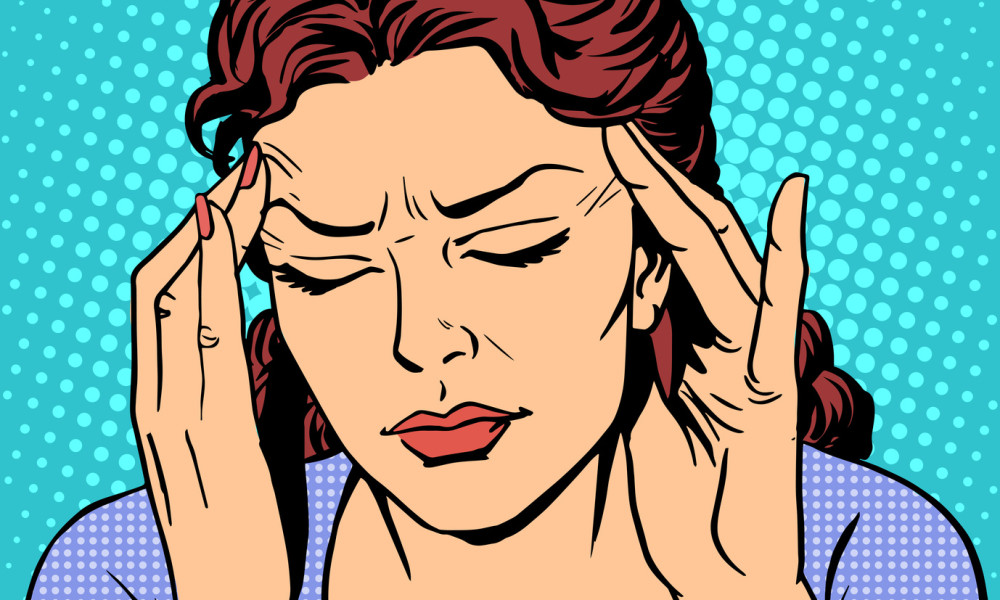
Emotional or psychological stress can manifest as physical tension within the neuromuscular system. The scalp is often at the center of this tension.

Think of the difference in stresses between a rogue male lion and one at the head of a pride. As the leader of a bunch of females, the alpha male lion experiences a life of little worry as his food is provided for. With plenty of nutrition and little (relative) stress, the male lion can afford to “spend” resources on the growth of a mane. Compare that to the life of the lone male who is not only on in competition with the area’s other predators, but with an uncertain supply of food. The sheer stress of its life does not allow for excess hair growth of that level. This is not to say that each male lion is in their respective positions for life, but for the moment. If circumstances presented themselves and the two were to switch, a reversal of the hair discrepancy would likely follow. This same logic applies to us as humans too.
Another factor in the equation of hair loss is the diet. Although the means of nutrient delivery is significant in supporting hair, if the nutrients themselves are lacking in raw materials so shall the growth of hair follicles atop the scalp. Specific nutrients are difficult to pinpoint and it is rarely the case of being devoid of a single vitamin or mineral. Instead, it is likely that many deficiencies are to blame, all culminating in the suppression of the hair cycle over time. Vitamins C, D, and Iron are some of the most important in this regard (8). Deficiencies in any may contribute to suppression of the hair cycle.
Solutions
Hair loss is indeed reversible. The solutions to such a problem are not instant fixes, but lifestyle changes. The most important areas of focus for the issue are diet, stress, and improving the physical integrity of the craniofacial muscles.
Face and Scalp Muscles

The function of the muscles residing on the face and skull directly influence the available blood flow and therefore nutrient exchange potential of the hair follicles. If dysfunctional, the available nutrition to the hair will suffer. Therefore it is important to maintain a strong and supple face and skull. Although a fairly foreign concept, your face and skull are not a single bone but a series of bones that fit together like a puzzle, allowing for subtle movement. The position of said bones is determined by the tone of these facial/scalp muscles.
It is important to understand that the muscles of the skull are influenced greatly by the rest of the body. Imagine the skull as a bowling ball placed on top of a flexible rod; this is essentially the precarious situation for your spine and skull. Slight deviations in posture have massive effects on the forces placed upon the head. For instance, if the skull is propped in front on the spine the scalp must work harder to maintain upright posture. Given that the scalp plays a role in the position of the skull it follows that posture and scalp integrity go hand in hand.
Knowing that the function of muscles is wholly dependent on the nerves that control it we can infer that neurological issues can be the root of hair loss. The most significant nerves in this equation are the trigeminal (Latin for “three twinned) nerve and the facial nerve.
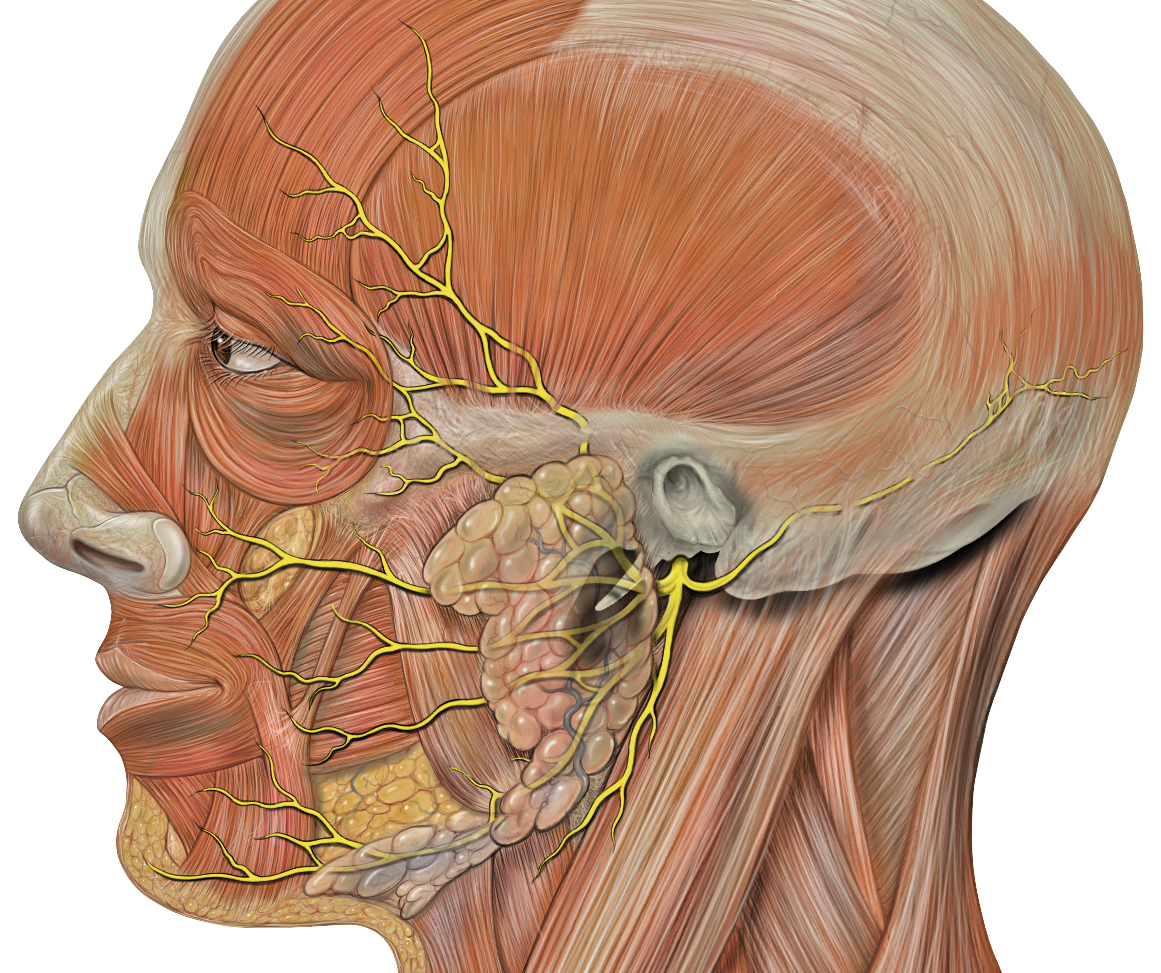

Both nerves innervate muscles of the face and skull. The trigeminal deals with the muscles of mastication: the temporalis, massester, buccinator, and pterygoid muslces. The facial nerve commands the superficial muscles of the face along with the frontalis muscle of the scalp. Combined, these two nerves dictate the tension experienced by the galea aponeurotica. Dyfunction of either, or both, can contribute to hair loss over time.
The crux of this issue lies in the temporomandibular joint (TMJ); where the jaw meets the skull. This mobile joint is subject to dysfunction (Temporomandibular Dysfunction; TMD), which has the potential to impinge nearby nerves. The trigeminal and facial nerves are subject to this fate during excess mandibular retraction; a consequence of improper mouth/breathing posture along with whole body posture. The process pinches the nerves between the mandible and skull, thus restricting control of their corresponding muscles. Symptoms include but are not limited to: sharp pains in the area, numbness in the region, difficulty opening the mouth, difficulty breathing, sporadic tear secretion, and dental crowding (9).

The posture of the entire body carries over into the posture of the jaw. As one can see, if the head is propped in front of the spine the jaw slides back and potentially inhibits the adjacent nerves. The result of chronic impingement is atrophy of both nerves and muscles, a combination that could further worsen hair loss. To prevent such a scenario it is critical to remain aware of total body posture along with the position of the jaw. The head being aligned with the hips — assuring proper spinal position — and protracting (jutting out) the jaw can help alleviate any pressure
Diet
It is one issue if the means of nutrient delivery is compromised, it is another if the nutrient supply itself is lacking. A diet devoid of certain key vitamins and minerals can inhibit the rate at which hair can support itself. As mentioned before, foods rich in Vitamin D3, Vitamin C, and Iron will all help to support hair growth. Vitamin K2 and Magnesium may also help the cause too. Restricted blood flow over time can cause blood vessels of the scalp to calcify. Such an occurrence further weakens the effectiveness of the vasculature potentially accelerating hair loss. Both K2 and Magnesium act to decalcify soft tissues of the body (10). These can even be applied topically to the scalp in order to direct their absorption where it is needed.
Reduce Stress
Excess stress is the enemy of your health. In serious cases this could mean a chronic, debilitating disease and others could mean losing your hair. It is critical to change your perception of your life events so that it does not trigger your innate fight or flight response. Prayer, meditation, gratitude, and mindfulness are all means to achieve this control over one’s own mind. Not doing so could mean you living without hair or even developing a deadly chronic disease.
Upper Chest Breathing
In the early 1900’s physician Dr Delos Parker postulated a theory by which hair loss was accelerated by predominant belly breathing. While seemingly ridiculous at first, the doctor claimed that he had never encountered a bald(ing) individual that breathed primarily through through their upper chest (11). When taking a look at the anatomy and physiology of breathing it becomes apparent that Dr Parker could have been on to something.
Three of the most important muscles of respiration include the trapezius, sternoclediomastoid, and scalenes. Together these muscles help to expand the rib cage vertically by elevating the scapula, first ribs, and clavicle. At the same time these muscles help to keep the head balanced atop the the cervical spine. Given the relationship of hair loss with the position of the skull, mandible, and spine it follows that Dr Parker’s theory could be something of merit. Taking into account the importance of the skeletal muscle pump it could make sense that these large and influential muscles influence blood to local areas like the scalp as well as contributing to better posture

While some may dismiss the significance of upper chest breathing to hair loss it is a factor that should not be ignored. Correcting dysfunctional posture– including face and spine –hinges on one’s ability to utilize the trapezius, sternocleidomastoid, and scalenes, muscles that should be active during each and every.
Conclusion
Hair loss should not be a death sentence. Instead, if you are losing your hair you should take it as a sign of your physical body attempting to adapt to the presented environmental circumstances. Improving your posture (body and face), eating right, and brushing off stress are the three keys towards doing so. Given enough time, and enough dedication, your hair can rise from the metaphorical ashes and grant you another asset in this life.
References
- Kiguradze, T., Temps, W. H., Yarnold, P. R., Cashy, J., Brannigan, R. E., Nardone, B., … Belknap, S. M. (2017). Persistent erectile dysfunction in men exposed to the 5α-reductase inhibitors, finasteride, or dutasteride. PeerJ, 5, e3020. doi:10.7717/peerj.3020
- Gheshlaghi, F., Zoofaghari, S., & Dorooshi, G. (2018). Unstable Angina: A Rare Presentation of Minoxidil Intoxication: A Case Report and Literature Review. Journal of research in pharmacy practice, 7(4), 210–212. doi:10.4103/jrpp.JRPP_18_23
- Alonso, L., & Fuchs, E. (2006, February 01). The hair cycle. Retrieved from https://jcs.biologists.org/content/119/3/391
- Cranwell W, Sinclair R. Male Androgenetic Alopecia. [Updated 2016 Feb 29]. In: Feingold KR, Anawalt B, Boyce A, et al., editors. Endotext [Internet]. South Dartmouth (MA): MDText.com, Inc.; 2000-. Available from: https://www.ncbi.nlm.nih.gov/books/NBK278957/
- Kim, N., Kim, J., Lim, K., & Park, J. (2018). Role of dihydrotestosterone in whole-body energy utilization during acute running exercise in mice. Journal of exercise nutrition & biochemistry, 22(2), 7–11. doi:10.20463/jenb.2018.0010
- Tellez-Segura R. (2015). Involvement of Mechanical Stress in Androgenetic Alopecia. International journal of trichology, 7(3), 95–99. doi:10.4103/0974-7753.167468
- English, R. S. (2018). A hypothetical pathogenesis model for androgenic alopecia: clarifying the dihydrotestosterone paradox and rate-limiting recovery factors. Medical Hypotheses, 111, 73–81. doi: 10.1016/j.mehy.2017.12.027
- Almohanna, H. M., Ahmed, A. A., Tsatalis, J. P., & Tosti, A. (2018). The Role of Vitamins and Minerals in Hair Loss: A Review. Dermatology and therapy, 9(1), 51–70. doi:10.1007/s13555-018-0278-6
- Ter Braake, A. D., Tinnemans, P. T., Shanahan, C. M., Hoenderop, J., & de Baaij, J. (2018). Magnesium prevents vascular calcification in vitro by inhibition of hydroxyapatite crystal formation. Scientific reports, 8(1), 2069. doi:10.1038/s41598-018-20241-3
- Larsen, K., Larsen, K. L., & Kjetil. (2018, November 20). The true cause and solution for temporomandibular dysfunction (TMD). Retrieved from https://treningogrehab.no/true-cause-solution-temporomandibular-dysfunction-tmd/
- Segrave, K. (2008). Baldness: a social history. Jefferson, NC: McFarland.

 Health For Life