

Humans belong to the phylum Chordata, meaning “with a chord”. This taxonomical division is shared by the likes of all vertebrates, including fish, amphibians, reptiles, birds, and other mammals. Despite superficial differences all species belonging to this phylum possess a backbone and a spinal chord. It is from this backbone (and spinal chord) that the entirety of the organism rests upon, from its brain to its muscles. At the same time, the flexible yet sturdy structure acts as an engine, helping the organism move itself through space.
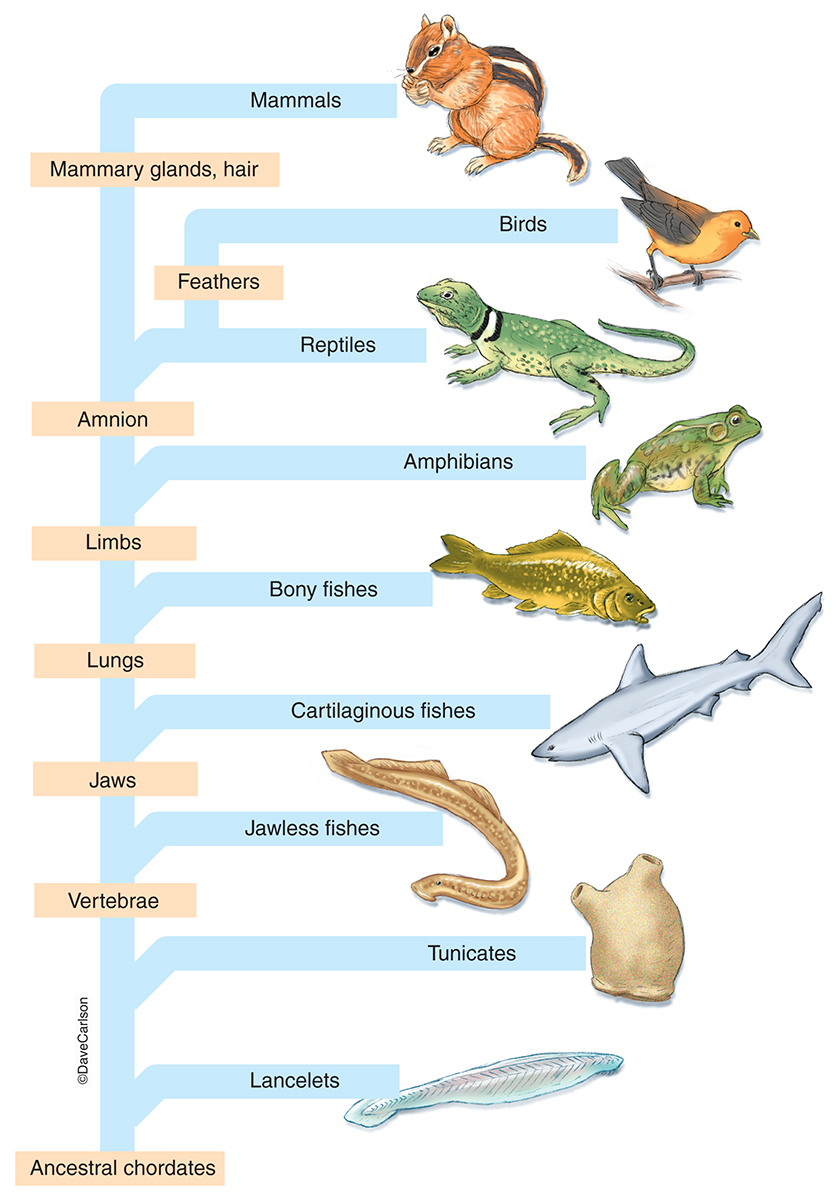
Fish, some of the first vertebrates, move themselves through the action of lateral flexion. This is the side to side motion that helps propel their tail fins through water. From eels to tuna this is the predominant method by which locomotion is achieved in our water dwelling relatives. As fish took to land and evolved into the amphibians and reptiles we know today the same movement patterns stayed with them. Amphibians and reptiles, the next branches in the evolutionary tree still practice this same technique in order to move.


The lateral flexion of the spine acts to create an axial torque within the structure of the spine (1). Such forces help to move and stabilize the organism throughout all three dimensional planes. Additionally, the movement allows for smooth efficient transfer of energy throughout the spine and through the limbs. The combined consequences for such a movement translate into a means of propulsion that maximizes energy output and minimizes the input.


As one winds up the evolutionary tree in vertebrates, this same movement pattern follows. Even us as humans, advanced bipedal organisms, still incorporate lateral flexion as a means to induce motion. Though not as exaggerated as in our distant relatives, lateral flexion of the spine induces sagittal flexion/extension and well as rotation. This allows humans to balance themselves on two limbs while maintaining an upright posture.

How?

The basis for this motion lies in the physical architecture of a spine itself. Comprised of 33 separate vertebrae that exist parallel to one another, the spine allows for movement in any dimensional plane. It is crucial for the spine to stay supple, allowing for the seamless transfer of energy between both sets of limbs. Any hiccups in this chain can mean the incomplete — and inefficient — transmission of force. This translates to some part of the body compensating for a lack of movement somewhere, increasing the likelihood of injury.


In humans, our upright posture and lack of a tail makes lateral flexion harder to discern to the untrained eye. Yet, each and every time you take a step you are slightly bending to each side. With each bend comes opposing rotation from the spine, allowing for the skeletal muscles to exert force upon the ground. At the same time there exists slight flexion and extension of the spine in the sagittal plane. Combined this allows the spine to be stable and strong in all three dimensional planes.

This complex series of actions may seem somewhat unwieldy but it is actually pure genius. The spine is not a bridge between the upper and lower limbs, but an engine from which movement originates. Further proof for this lies in the fact that despite losing entire limbs humans are still able to walk on their pelvis. Such an action would be impossible if it weren’t for the intuitive design of the spine.
How Do I Train This?
Training lateral flexion, and the cascade of actions that follow includes some of the simplest exercises one can do. Crawling, an action performed by all of our four legged friends is arguably the most complete, yet safest exercise one can do. Utilizing every major muscle group, while requiring strength, balance, and finesse, the crawl is the king of movement. The crawl facilitates motion in all three dimensional planes of movement as well, making sure no muscles go un-trained.
Crawls

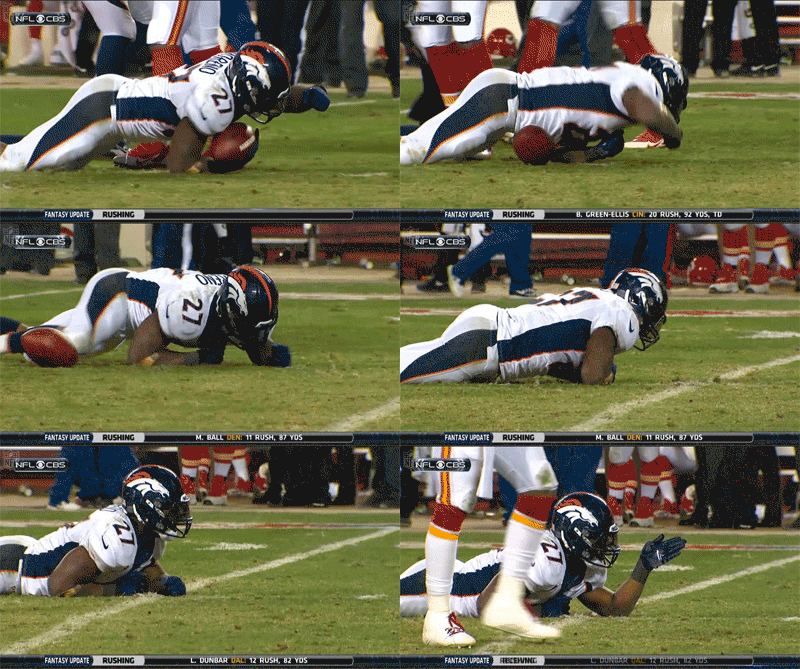
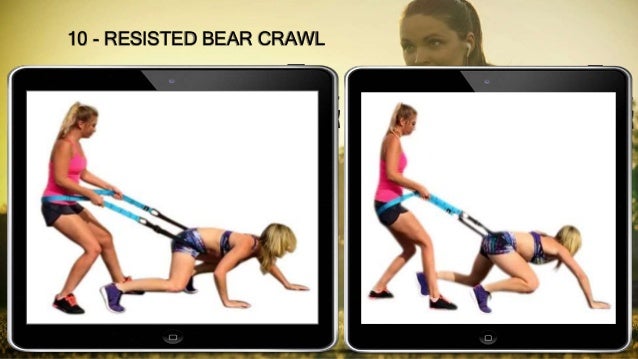
The intensity of the crawl exercise is dependent on the limb length applied to the ground. An army crawl, performed on the elbows and knees requires more spine movement than a baby crawl, done on the hands and knees. As you move into a bear crawl, where both the hands and feet contact the ground, the movement becomes slightly easier and requires less movement to be done at the spine and more at the limbs. When performed in all movable directions (forward, backwards, and laterally) this exercise will work every single major muscle group in the body. When moving your body weight becomes too easy, resistance can be added in the form of a weighted sled –attached via harness– or from a resistance band around the knees/elbows or from a partner holding you back.

Lunges
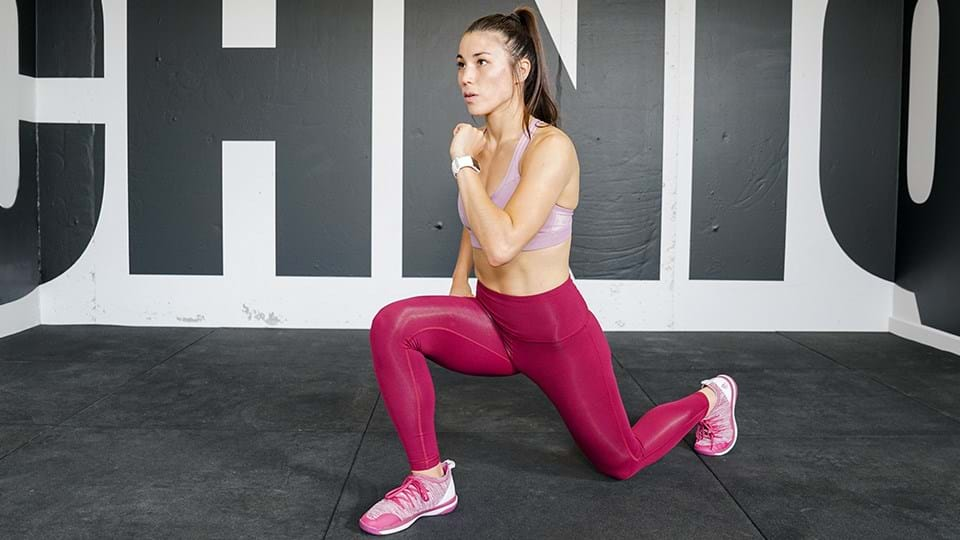
A lunge is essentially an upright, two legged crawl. Though the position of spine is shifted, lateral flexion is still present and necessary for efficient and powerful movement. This is achieved through using the arms in conjunction with the legs during the exercise.
Walking/Running

Walking and running are the two most simple and effective exercises for lateral flexion. However just as a lunge, running and walking should be treated similarly to a crawl. What this means is that the arms are still relied upon for force transmission through the spine. This is especially true of world class athletes as one can see in the picture. The fastest individuals in the world, Olympic sprinters, generally have rather sizable arms, moreso than one would think considering we run on our hind legs. This is because the muscles at the shoulder synergize with the muscles of the hips, helping to increase total power output, while minimizing the input.

Walking and running are the two most simple and effective exercises for lateral flexion. However just as a lunge, running and walking should be treated similarly to a crawl. What this means is that the arms are still relied upon for force transmission through the spine. This is especially true of world class athletes as one can see in the picture. The fastest individuals in the world, Olympic sprinters, generally have rather sizable arms, moreso than one would think considering we run on our hind legs. This is because the muscles at the shoulder synergize with the muscles of the hips, helping to increase total power output, while minimizing the input.
Conclusion
Forgoing lateral flexion will result in weak and inefficient movement throughout the entire body. A lifetime spent walking around –and participating in bouts of exercise– without utilizing the spine’s maximum potential could mean injuries and/or decreased athletic performance.
References
- Gracovetsky, S., & Iacono, S. (1987). Energy transfers in the spinal engine. Journal of Biomedical Engineering, 9(2), 99–114. doi: 10.1016/0141-5425(87)90020-3

 Health For Life